


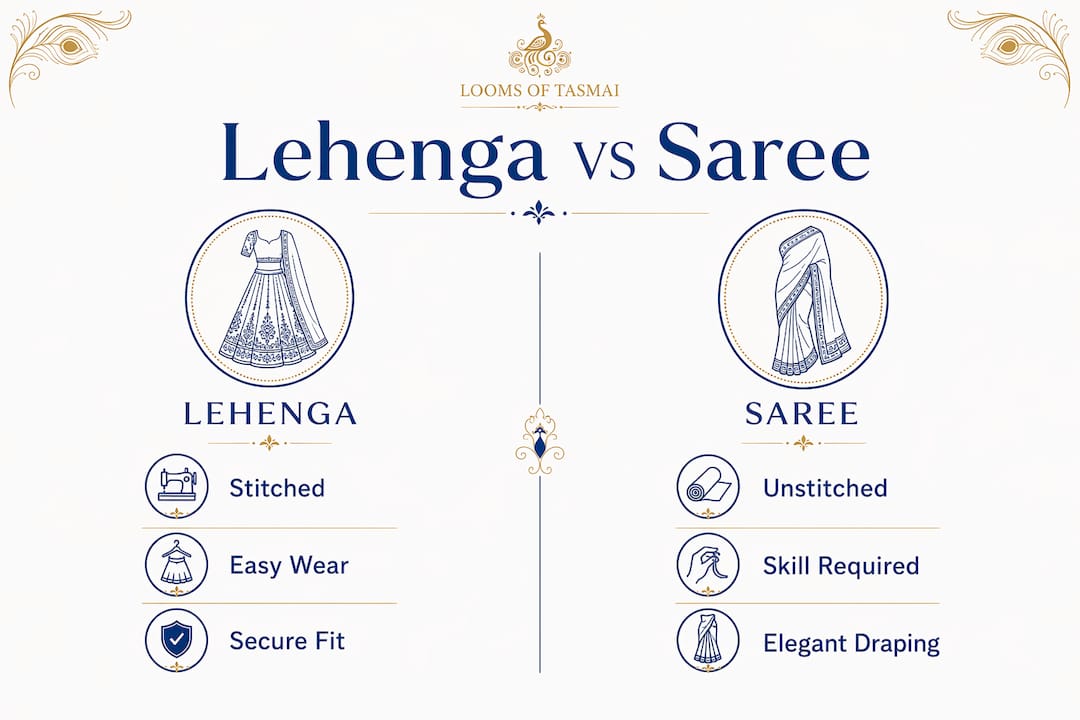
A lehenga is a stitched three-piece outfit consisting of a flared skirt, fitted blouse, and dupatta, while a saree is a single length of unstitched fabric draped around the body. The lehenga vs saree debate is one of the most common questions for anyone choosing Indian ethnic attire for a wedding, festival, or cultural event. Both garments carry deep cultural significance across South Asia, and both have earned devoted followings in the Indian American community. The right choice depends on your comfort level, the occasion, and how much time you want to spend getting dressed.
What is the difference between lehenga and saree?
The structural difference between these two garments is significant. A lehenga functions like any tailored Western outfit. You step into the skirt, pull on the blouse, and drape the dupatta over your shoulder. The entire process takes 10–15 minutes without any outside help. That speed and simplicity make it the go-to choice for first-time wearers of Indian ethnic attire.
A saree, by contrast, is roughly 5–9 yards of unstitched fabric. Wearing one correctly requires learning to form neat pleats at the waist, tuck them securely into a petticoat, and drape the pallu (the decorative end panel) over the shoulder or across the chest. Saree draping styles vary by region. The Nivi style from Andhra Pradesh is the most widely recognized, while the Bengali, Gujarati, and Maharashtrian styles each follow distinct draping patterns.
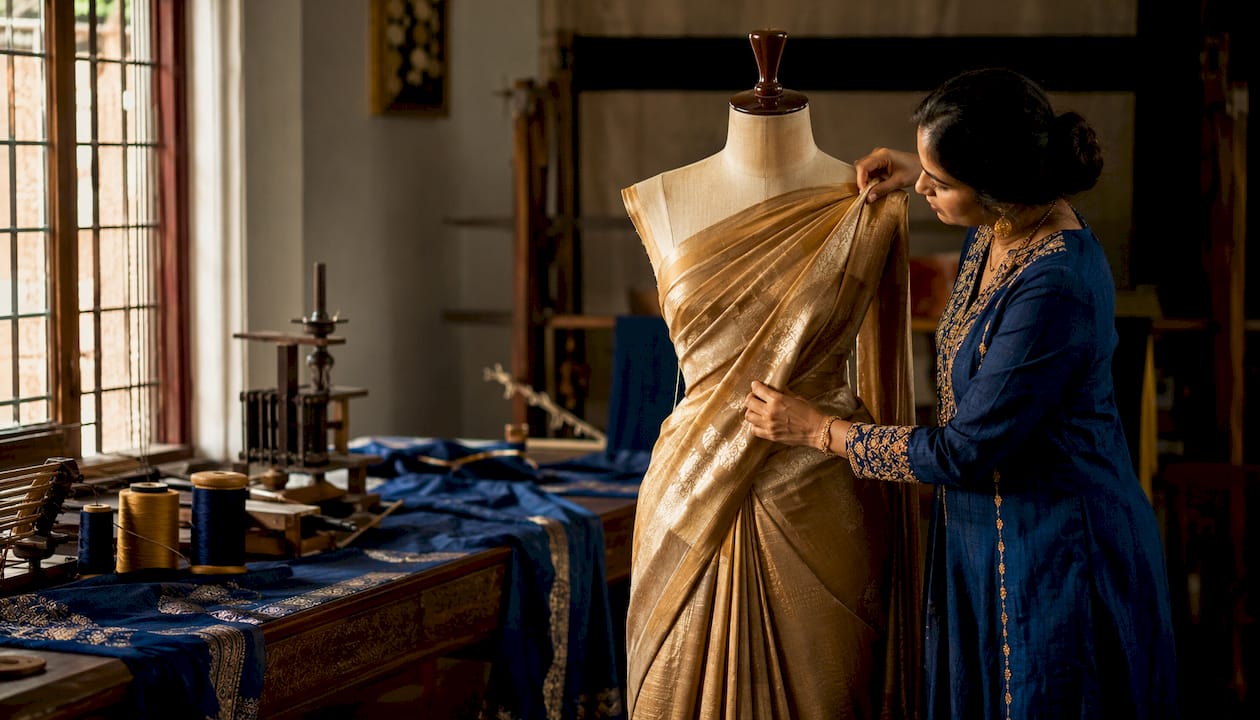
The core trade-off is clear. A lehenga offers a fixed, secure fit with no draping required. A saree rewards skill and practice with an elegance that no stitched garment can fully replicate.
Structure and fabric comparison
| Feature | Lehenga | Saree |
|---|---|---|
| Construction | Stitched, three pieces | Unstitched, single fabric |
| Wearing time | 10–15 minutes | 20–40 minutes (skill-dependent) |
| Common fabrics | Silk brocade, velvet, georgette | Chiffon, georgette, Banarasi silk, cotton |
| Draping required | No | Yes |
| Fit security | High | Moderate (depends on draping) |
| Modern alternatives | Lehenga saree hybrid | Pre-draped saree |
Pro Tip: If you are new to Indian ethnic wear, try a pre-draped saree first. It gives you the traditional look without the learning curve of full draping.
How do comfort and mobility compare for long events?
Lehengas win on mobility for active events. The stitched waistband and fitted skirt stay in place whether you are dancing at a sangeet, sitting through a long ceremony, or navigating a crowded reception hall. The dupatta can be pinned to the blouse to keep it from slipping. That security matters when you are on your feet for six or more hours.
Saree comfort is more variable. Comfort in a saree depends heavily on fabric choice and draping skill. A lightweight georgette or chiffon saree drapes softly and moves with the body. A heavy Banarasi silk saree, while stunning, can feel restrictive and tiring over a full day. Many beginners choose unsuitable fabrics and then blame the garment for their discomfort. The saree is not inherently uncomfortable. The wrong fabric choice is.
Here are the key comfort factors to weigh before choosing:
- Fabric weight: Chiffon and georgette are lighter and more forgiving than silk or velvet.
- Draping skill: A well-draped saree stays put. A poorly draped one needs constant adjustment.
- Event length: Lehengas hold up better over multi-hour events without re-pinning.
- Weather: Cotton sarees breathe better in warm climates. Velvet lehengas suit cooler indoor venues.
- Footwear: Sarees require heels or wedges to keep the hem off the floor. Lehengas offer more footwear flexibility.
Pro Tip: For outdoor summer events, choose a semi-silk saree in georgette or cotton blend. These fabrics stay cool and drape beautifully without the weight of pure silk.
Which outfit works best for weddings and cultural events?
The occasion shapes the choice more than personal preference does. Bridal lehengas are preferred for their dramatic, heavily embellished appearance. A bridal lehenga in Banarasi silk brocade with Zari embroidery creates a royal silhouette that photographs powerfully. The structured skirt also supports heavy embroidery and stonework without pulling or distorting the way a draped fabric might.
Sarees hold a different kind of cultural authority. For rituals like the Griha Pravesh (house entry ceremony), Satyanarayan Puja, or traditional South Indian weddings, a silk saree is the expected and respected choice. Many mothers of the bride and female relatives choose sarees for family functions precisely because the garment signals cultural continuity and grace.
| Event type | Recommended attire | Reason |
|---|---|---|
| Bridal ceremony (North Indian) | Bridal lehenga | Dramatic silhouette, supports heavy embellishment |
| South Indian wedding rituals | Silk saree | Cultural tradition, regional expectation |
| Sangeet or reception | Either, or lehenga saree hybrid | Comfort for dancing, personal style |
| Diwali or Navratri celebration | Lehenga or festive saree | Festive color, ease of movement |
| Office Diwali party | Cotton or georgette saree | Professional setting, lighter fabric |
| Mehendi ceremony | Lehenga | Bright colors, active event |
Modern Indian weddings in the United States often span multiple events across two or three days. Guests and brides alike are choosing different outfits for each function, which means both garments appear at the same wedding. Pre-draped sarees have grown in popularity for guests who want the traditional look without the draping skill requirement.
Styling versatility, maintenance, and cost
Sarees offer more long-term value per wear. Sarees can be styled multiple ways by pairing the same fabric with different blouses, changing the draping style, or wearing it with a belt for a contemporary look. A Banarasi silk saree worn at a wedding can reappear at a Diwali party with a different blouse and jewelry without anyone recognizing the repeat.
Lehengas are harder to restyle. The skirt, blouse, and dupatta are designed as a matched set. Wearing the skirt with a different top or the blouse with different bottoms rarely looks intentional. That makes a lehenga a high-cost, single-occasion investment for most wearers.
Cost is a real factor. Designer lehengas typically range from $250 to $1,200, while sarees generally range from $150 to $500 depending on fabric and embroidery. A lehenga costs more upfront and delivers fewer repeat wears. A saree costs less and offers more styling flexibility over time.
Practical tips for budgeting and care:
- Dry clean heavy silk and brocade pieces after each wear to preserve embroidery and fabric integrity.
- Store sarees folded in muslin cloth, not plastic, to prevent moisture damage.
- Invest in a quality blouse for your saree. A well-fitted blouse transforms the entire look.
- Rent a bridal lehenga if you plan to wear it only once. Rental options in major US cities have expanded significantly.
- Buy a mid-range saree for events where you want elegance without the full bridal investment.
Are lehenga saree hybrids the future of Indian wedding fashion?
The lehenga saree is a modern fusion garment that combines the lehenga skirt base with a pre-attached or minimal-drape pallu. You get the visual effect of a saree without learning to drape one. The skirt stays in place, the pallu is pre-set, and you can move freely through a full day of wedding events.
Longer, multi-event weddings have driven demand for this hybrid style. Brides and guests who want to dance, socialize, and sit through ceremonies without adjusting their outfit every hour are choosing lehenga sarees in growing numbers. Social media has accelerated this trend, with influencers showcasing how the hybrid works across sangeet, reception, and even bridal looks.
Pro Tip: Lehenga sarees require professional tailoring to adjust pre-stitched pleats to your height and build. Off-the-rack sizing rarely fits perfectly. Budget for one tailoring session before the event.
Key Takeaways
The best choice between a lehenga and a saree depends on your occasion, comfort level, and how often you plan to repair the outfit.
| Point | Details |
|---|---|
| Lehenga is faster to wear | A lehenga takes 10–15 minutes to put on without help, making it practical for active events. |
| Saree comfort depends on fabric | Lightweight georgette or chiffon sarees are far more comfortable than heavy silk for long events. |
| Occasion drives the choice | Bridal lehengas suit North Indian ceremonies; silk sarees are traditional for rituals and South Indian weddings. |
| Sarees offer more repeat value | A saree can be restyled with different blouses and draping methods, making it more cost-effective over time. |
| Hybrids solve the hardest trade-offs | Lehenga sarees provide the look of a saree with the ease and security of a lehenga skirt. |
My honest take on the lehenga vs saree question
I have watched this debate play out at dozens of weddings, and the answer is almost never about which garment is objectively better. It is about who is wearing it and why.
The lehenga gets chosen by people who want to look stunning without worrying about their outfit for the next six hours. That is a completely valid priority. A bridal lehenga in Banarasi silk brocade with Zari weaving is one of the most visually powerful garments in any fashion tradition, anywhere in the world. If you want drama and security, the lehenga delivers both.
The saree, though, carries something the lehenga cannot fully replicate. There is a quiet confidence in a woman who wears a saree well. The garment rewards practice and patience, and that relationship between wearer and fabric shows. A cotton silk saree with heritage motifs worn to a family puja communicates cultural fluency in a way no stitched outfit can match.
What I find most interesting is how the hybrid lehenga saree has reframed the entire conversation. It is not a compromise. It is a pragmatic evolution that respects both traditions while meeting the real demands of modern celebrations. The best outfit is the one you wear with confidence, not the one that looks best on a hanger.
— Shiva
Loomsoftasmai’s curated collection for every occasion
Whether you are drawn to the structure of a lehenga or the grace of a draped saree, Loomsoftasmai carries both with the craftsmanship they deserve.
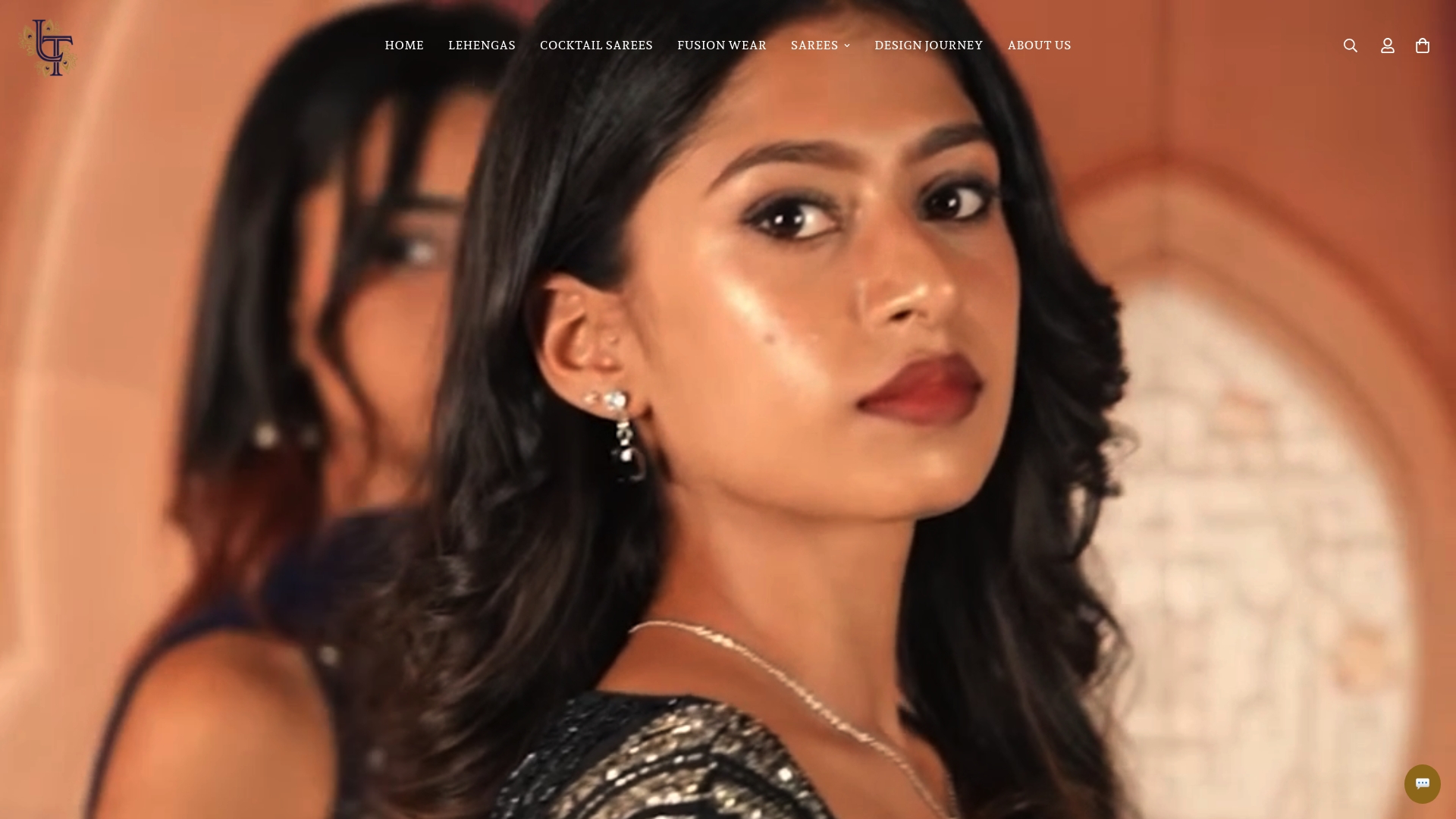
The collection at Loomsoftasmai includes handcrafted silk sarees, Banarasi brocade lehengas, and pre-draped styles built for wearers at every skill level. For brides and guests navigating multi-day wedding schedules, the range covers everything from heavy bridal pieces to lighter festive options. The Ivory Pichwai-Inspired Cotton Silk Saree with multicolor heritage borders is a strong choice for formal events and family functions. The Royal Fuchsia Banarasi Silk Brocade Lehenga Set brings traditional Zari weaving to bridal and reception occasions. Each piece is described in detail, with fabric, sizing, and styling guidance included.
FAQ
What is the main difference between a lehenga and a saree?
A lehenga is a stitched three-piece outfit (skirt, blouse, and dupatta) that requires no draping. A saree is an unstitched length of fabric that must be draped around the body using a specific regional technique.
Which is easier to wear, a lehenga or a saree?
A lehenga is significantly easier to wear. It can be put on in 10–15 minutes without assistance, while a saree requires draping skill that takes practice to develop.
Which is better for a bride, a lehenga or a saree?
Bridal lehengas are the dominant choice for North Indian weddings due to their dramatic, embellished silhouette. Silk sarees remain the traditional bridal choice for South Indian and Bengali ceremonies.
What is a lehenga saree?
A lehenga saree is a hybrid garment that combines a pre-stitched lehenga skirt with a pre-attached or minimal-drape pallu. It delivers the visual effect of a saree without requiring full draping skill.
Are sarees or lehengas more cost-effective?
Sarees are generally more cost-effective over time. They can be restyled with different blouses and draping methods, while lehengas are harder to rewear without obvious repetition.
Recommended
- Royal Fuchsia Banarasi Silk Brocade Lehenga Set with Heritage Zari Wea – Looms Of Tasmai
- Rani Pink Banarasi-Inspired Semi-Silk Saree with Multicolor Paisley Za – Looms Of Tasmai
- Mehendi Green Banarasi Inspired Semi-Silk Saree with Silver Zari Broca – Looms Of Tasmai
- Regal Lavender Sequin Embroidered Lehenga Set with Elegant Dupatta – Looms Of Tasmai


