



Indian wedding guest attire is traditional ethnic wear that respects ceremony customs while expressing personal style through color, fabric, and design choices. Indian weddings typically span 2–4 days with distinct events, each carrying its own dress code. That multi-event format means one outfit rarely covers the full celebration. Whether you are attending a Mehendi, Sangeet, or the main ceremony, knowing what to wear to an Indian wedding protects you from cultural missteps and keeps you looking polished throughout.
1. What are the key outfit types for Indian wedding guests?
The saree is the most versatile piece in any Indian wedding guest wardrobe. It works across events, from daytime ceremonies to formal receptions, and comes in fabrics ranging from lightweight chiffon to structured Banarasi silk. A Banarasi or Kanjivaram silk saree serves as a core investment piece that you can restyle with different blouses and accessories across multiple functions.
Lehengas are the second most popular choice for Indian wedding guest outfits. A lehenga is a three-piece set consisting of a flared skirt, a fitted blouse, and a dupatta. They suit festive and formal events equally well, and the embellishment level, from light embroidery to heavy Zari brocade, determines how formal the look reads.
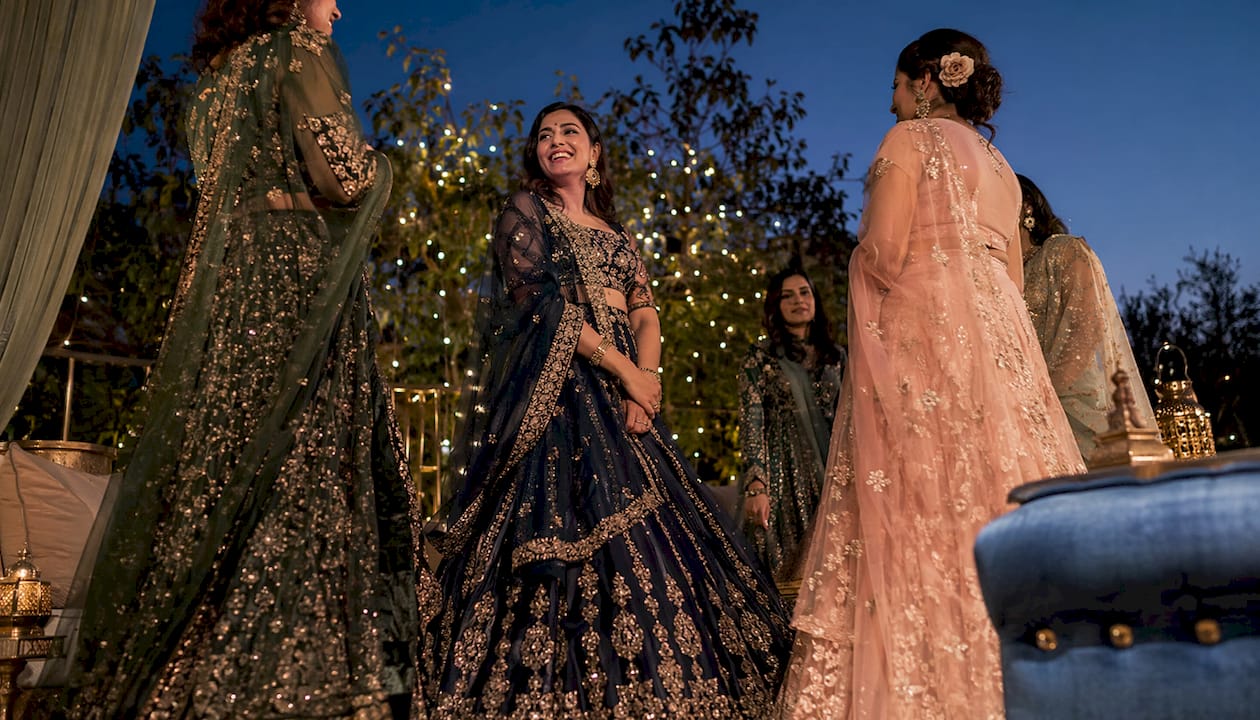
Anarkalis and salwar suits offer a comfortable, elegant middle ground. An Anarkali is a long, flared kurta worn over fitted pants, and it works beautifully for daytime events or guests who prefer a less structured silhouette. Salwar suits in georgette or crepe are equally appropriate and easier to move in.
Men attending Indian weddings have strong options too:
- Kurta with churidar or straight pants: The standard choice for most events, available in cotton for day functions and silk or brocade for formal occasions.
- Sherwani: A long, structured coat worn over a kurta, reserved for formal ceremonies and receptions.
- Bandhgala: A Nehru-collar jacket suit that reads as Indo-Western and works well for receptions.
- Dhoti kurta: A traditional regional option, particularly appropriate for South Indian or Bengali weddings.
Pro Tip: If you are new to Indian attire, start with a pre-stitched or pre-draped saree. These require no draping skills and look just as polished as traditionally draped versions.
2. How do colors and cultural traditions influence guest attire choices?
Color is one of the most important rules in the Indian wedding dress code. Red is reserved strictly for the bride. Wearing red as a guest, even in a dark burgundy shade, risks drawing attention away from the bride and signals a lack of cultural awareness.
White carries associations with mourning in many Indian traditions and is generally avoided at ceremonies. Black is considered inauspicious at religious ceremonies, though it is more accepted at evening receptions. Guests should avoid bright red, stark white, and black for most ceremony events, choosing jewel tones, metallics, and vibrant pastels instead.
Jewel tones like emerald green, royal blue, deep purple, and fuchsia are universally safe and festive choices for Indian weddings. Metallics in gold and silver read as celebratory across all regional traditions. Vibrant pastels such as peach, mint, and blush work well for daytime events.
Regional nuances matter. South Indian weddings, particularly Tamil and Telugu ceremonies, sometimes allow guests to wear red or off-white with gold borders, since those colors hold different significance in those traditions. Always check with the host family if you are unsure about regional customs.
Pro Tip: When the invitation does not specify a color theme, choose a jewel tone. It photographs beautifully, reads as festive, and avoids every major color taboo in one decision.
3. What attire is appropriate for each major Indian wedding event?
Indian weddings span multiple events, each with its own atmosphere and dress expectations. Dressing correctly for each function shows cultural awareness and genuine respect for the hosts.
Mehendi
The Mehendi is a daytime, casual-festive event centered on henna application and music. Breathable fabrics like cotton, linen, and light georgette work best. Bright colors such as yellow, green, and orange suit the festive mood. A Mehendi green semi-silk saree or a simple salwar suit in a vibrant hue is ideal. Avoid heavy embellishments that restrict movement.
Haldi
The Haldi ceremony involves turmeric paste applied to the couple, and turmeric stains are notoriously stubborn. Wear inexpensive cotton or linen outfits in yellow or white that you do not mind staining. Avoid silk, lace, or any high-value fabric entirely. This is the one event where your most casual, least expensive outfit is the correct choice.
Sangeet
The Sangeet is the most glamorous pre-wedding event. Sangeet attire calls for embellished, dance-friendly outfits in jewel tones and metallics. Sequined lehengas, embroidered Anarkalis, and heavily accessorized sarees all work well. Comfort matters because dancing is expected. Choose footwear you can move in, such as block heels or embellished flats.
Wedding ceremony
The main ceremony is the most formal event. Silk sarees in jewel tones or rich pastels are the gold standard for women. A Banarasi-inspired semi-silk saree in rani pink or a formal lehenga with Zari embroidery suits the occasion perfectly. Men should wear a sherwani or a formal silk kurta with churidar. Avoid anything too casual or too revealing.
Reception
Receptions are more flexible. Indo-Western fusion pieces, floor-length gowns with Indian embroidery, and dressy lehengas all fit the reception atmosphere. Metallics and bold colors photograph well under reception lighting. This is also the event where a sequin embroidered lehenga makes the strongest visual impact.
Pro Tip: Pack a small safety pin kit and fashion tape. Saree pleats shift during long events, and a quick fix takes seconds when you have the right tools on hand.
4. How to build a versatile Indian wedding guest wardrobe
Most guests make the same mistake: buying a completely new outfit for every function. Experts recommend a capsule wardrobe of interchangeable pieces instead. One high-quality silk saree, styled with two different blouses and accessory sets, reads as two distinct looks across two events.
A statement blouse or accessory transforms a traditional outfit without requiring a full change. Swap a simple blouse for an embellished one, add a contrasting dupatta, or change your jewelry from gold to silver, and the same saree works for both a daytime ceremony and an evening reception.
Here is a practical capsule breakdown for a multi-day Indian wedding:
- One silk or semi-silk saree: Wear it for the ceremony or reception with a formal blouse.
- One lehenga set: Reserve it for the Sangeet or reception, where embellishment reads best.
- One salwar suit or Anarkali: Use it for the Mehendi or any daytime function.
- One inexpensive cotton outfit: Dedicated to the Haldi. Do not overthink this one.
- Two blouse options: One simple, one embellished, to restyle your saree across events.
Footwear and bags
Footwear choice is critical at Indian weddings. Many religious ceremonies require shoe removal at the entrance. Complicated lace-up shoes create delays and frustration. Slip-on embellished flats, juttis, or block-heeled sandals are the practical standard. Wedges work well for outdoor venues where heels sink into grass.
Potli bags and metallic clutches complement most Indian outfits without needing to match exactly. A gold or silver clutch pairs with virtually any jewel tone. Keep your bag small enough to hold your phone, cards, and a few essentials without weighing you down during dancing.
Pro Tip: Buy juttis one half-size larger than your normal shoe size. They tend to run small and will feel much more comfortable after hours of standing and dancing.
| Outfit piece | Best event |
|---|---|
| Silk or semi-silk saree | Wedding ceremony, reception |
| Embellished lehenga | Sangeet, reception |
| Salwar suit or Anarkali | Mehendi, daytime functions |
| Inexpensive cotton outfit | Haldi only |
| Slip-on embellished flats | All events requiring shoe removal |
Key Takeaways
The most effective Indian wedding guest strategy combines one or two high-quality anchor pieces with interchangeable accessories, matched to each event’s specific dress code and color expectations.
| Point | Details |
|---|---|
| Avoid bridal colors | Skip red, stark white, and black for most ceremony events; choose jewel tones instead. |
| Match outfit to event | Haldi needs cheap cotton; Sangeet needs embellished glamour; the ceremony needs formal silk. |
| Build a capsule wardrobe | One silk saree and one lehenga, restyled with different blouses, cover most functions. |
| Prioritize footwear | Slip-ons or embellished flats handle shoe-removal ceremonies without delay or discomfort. |
| Non-Indian guests can wear Indian attire | Wearing a saree or kurta as a non-Indian guest is welcomed and appreciated by most hosts. |
What I have learned about dressing for Indian weddings
After attending and advising on attire for dozens of Indian weddings across the United States, the pattern I see most often is guests who over-buy and under-plan. They purchase five separate outfits, wear each one once, and spend far more than necessary. The guests who look the best are almost always the ones who invested in two or three excellent pieces and styled them thoughtfully.
Footwear is the most underestimated decision. I have watched guests in gorgeous lehengas struggle to remove complicated heeled boots at a temple entrance, holding up the entire line. A beautiful jutti or embellished flat costs a fraction of what those boots cost and causes zero problems.
Non-Indian guests often ask me whether it is appropriate to wear Indian clothing. The answer is yes, without reservation. Wearing traditional Indian attire as a non-Indian guest signals genuine respect and enthusiasm for the culture. Hosts notice and appreciate it. The only rule is to wear it with care, not as a costume.
Regional variation is real and matters more than most guides acknowledge. A South Indian Brahmin wedding has different color norms than a Punjabi wedding or a Bengali ceremony. When in doubt, ask the host family directly. They will always prefer the question over a well-meaning mistake.
— Shiva
Authentic Indian wedding attire from Loomsoftasmai
Loomsoftasmai curates handcrafted sarees and lehengas built for exactly the kind of multi-event Indian wedding this guide describes. The collection includes Banarasi-inspired semi-silk sarees, Paithani-woven designs, and Kalamkari-printed silk blends, each suited to different events and formality levels.
A Paithani semi-silk saree with peacock and floral woven patterns works beautifully for a wedding ceremony or reception. For guests who prefer a lehenga, the Regal Lavender Sequin Lehenga delivers Sangeet-ready glamour with heritage embroidery. Every piece at Loomsoftasmai is designed to carry the weight of a significant occasion while remaining wearable across multiple events. Browse the full saree and lehenga collections at Loomsoftasmai to find your anchor piece for the celebration.
FAQ
What is the dress code for an Indian wedding guest?
The Indian wedding dress code calls for traditional ethnic wear such as sarees, lehengas, or salwar suits for women, and kurtas or sherwanis for men. Each event within the wedding has its own formality level, from casual cotton at Haldi to formal silk at the main ceremony.
Can non-Indian guests wear Indian clothing to a wedding?
Yes. Non-Indian guests wearing sarees, lehengas, or kurtas are warmly welcomed and often appreciated by the host family, as it signals respect for the culture and enhances the celebratory atmosphere.
What colors should guests avoid at an Indian wedding?
Guests should avoid bright red, which is reserved for the bride, as well as stark white, which is associated with mourning, and black, which is considered inauspicious at most ceremonies. Jewel tones, metallics, and vibrant pastels are the safest and most festive alternatives.
What should guests wear to a Haldi ceremony?
Wear inexpensive cotton or linen in yellow or white. Turmeric stains are permanent on most fabrics, so avoid silk, lace, or any outfit you value. This is the one event where your least expensive outfit is the right choice.
What footwear works best for Indian wedding events?
Slip-on embellished flats, juttis, or block-heeled sandals work best across all events. Many religious ceremonies require shoe removal, and slip-ons handle that without delay or discomfort.


